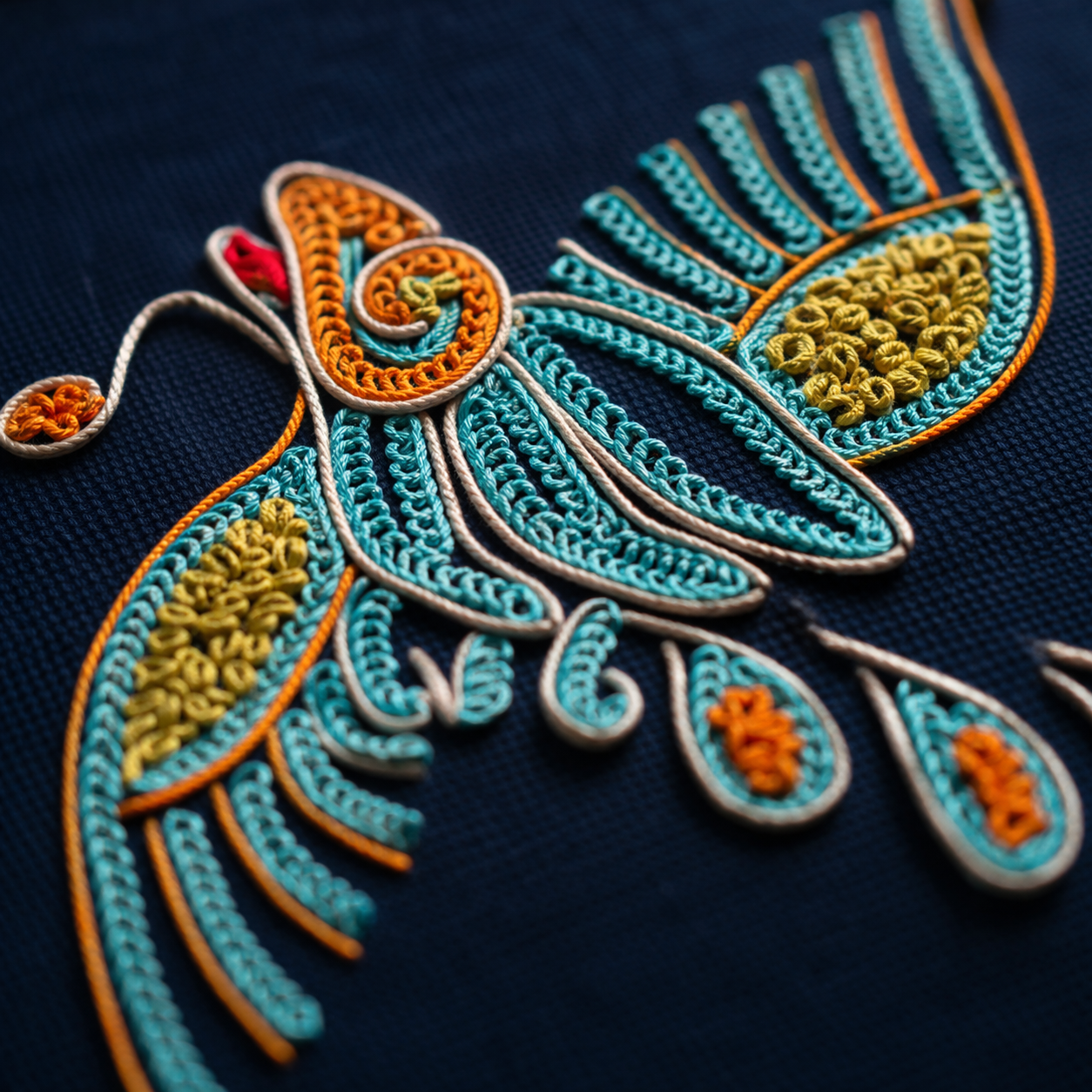
The Shui people have lived in the mountains of southern Guizhou for over a thousand years — one of China's most ancient and least-known ethnic groups. They have their own written script, the Shui script, one of the world's few surviving pictographic writing systems. And they have their embroidery. For generations, Shui women have used horsetail hair embroidery not as decoration but as memory — encoding kinship, ritual, and the natural world into every stitch. Each motif is a word. Each piece, a story passed on without ever being spoken.
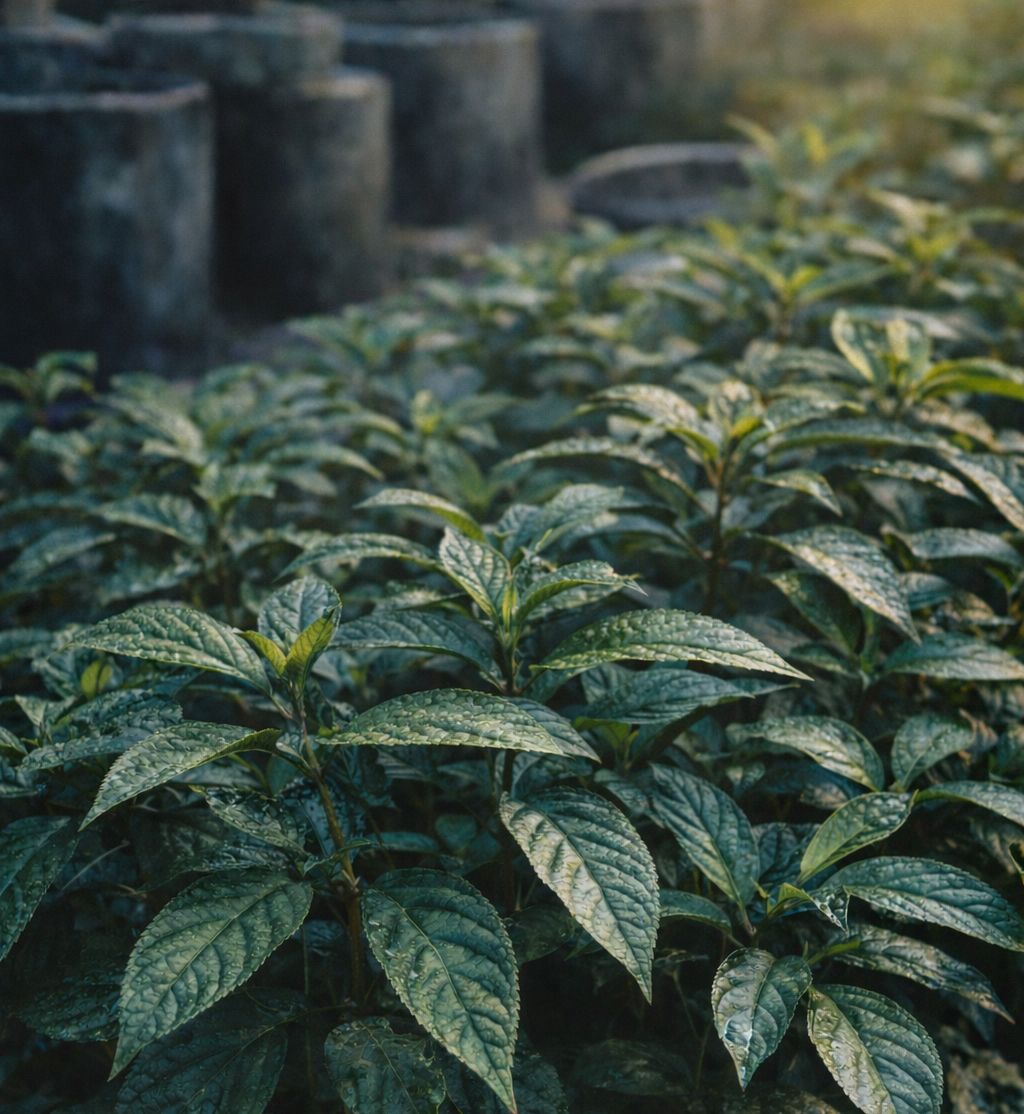
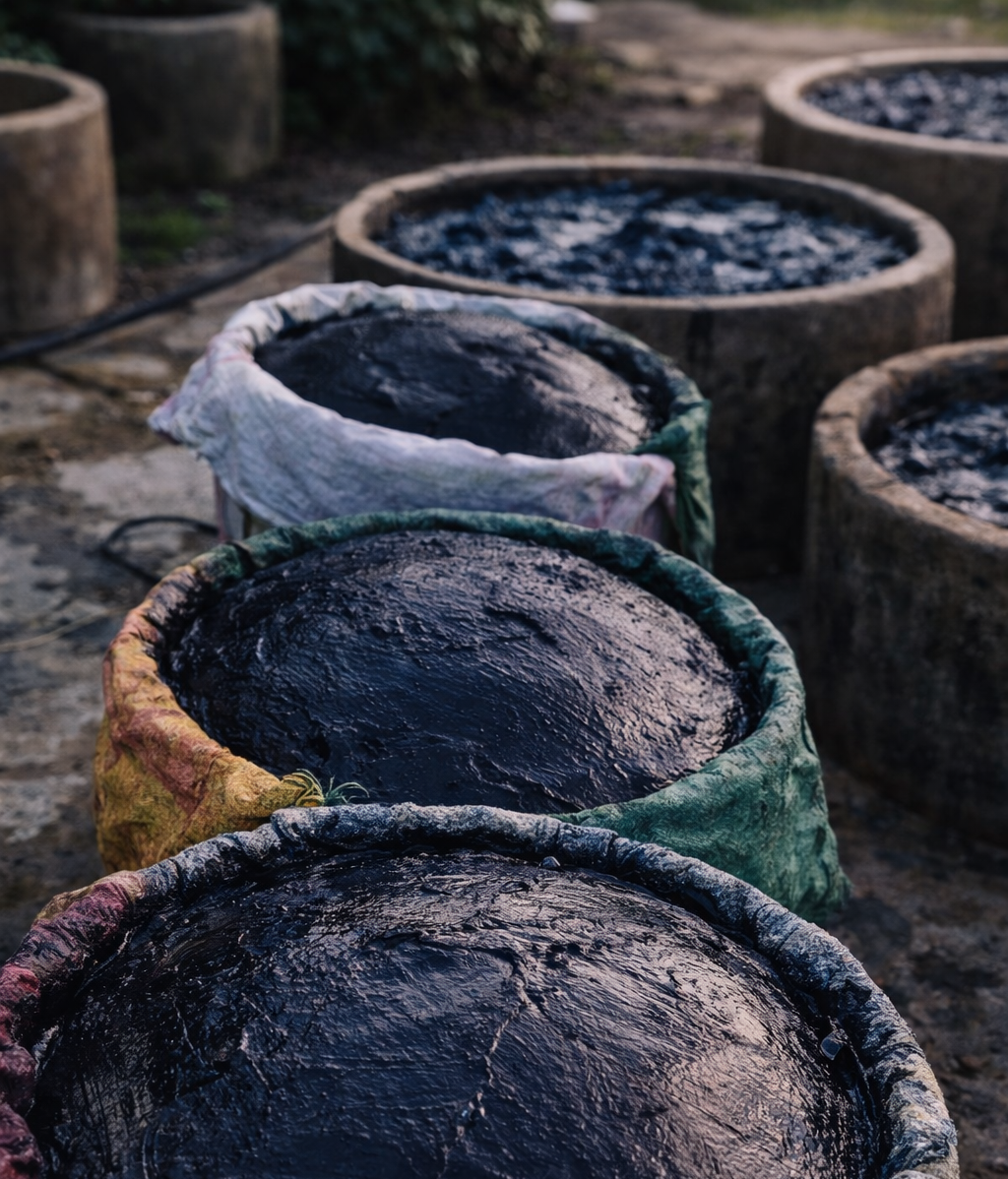
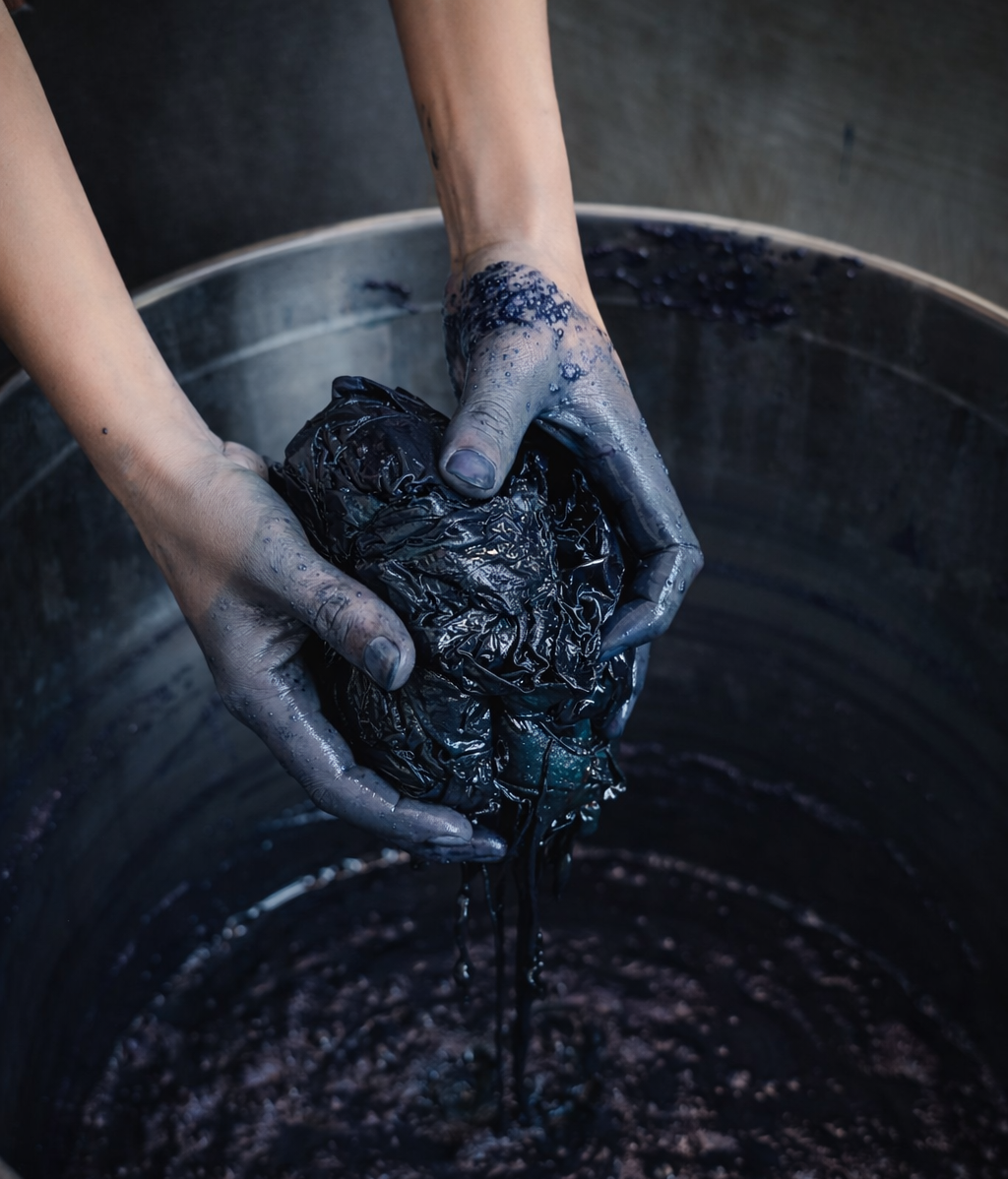
Before a single stitch, the cloth must become midnight. The Shui people dye their fabric by hand using indigo harvested from mountain fields — a four-step process unchanged for centuries.
01
采 叶
Harvest
Leaves of the indigo plant — Strobilanthes cusia — are gathered by hand from the mountain fields of Guizhou each summer.
02
浸 泡 · 发 酵
Soak & Ferment
Leaves steep in water for days, fermenting slowly. The liquid darkens as precursor pigments are released into solution.
03
加 石 灰
Add Lime
Slaked lime shifts the pH of the vat, causing the indigo pigment to precipitate — falling from the water and settling at the bottom.
04
蓝 靛 泥
Indigo Paste
The settled pigment is skimmed and packed into earthenware jars — a deep blue paste ready to dye cloth the colour of the midnight sky.
制 作 工 艺
Made by hand
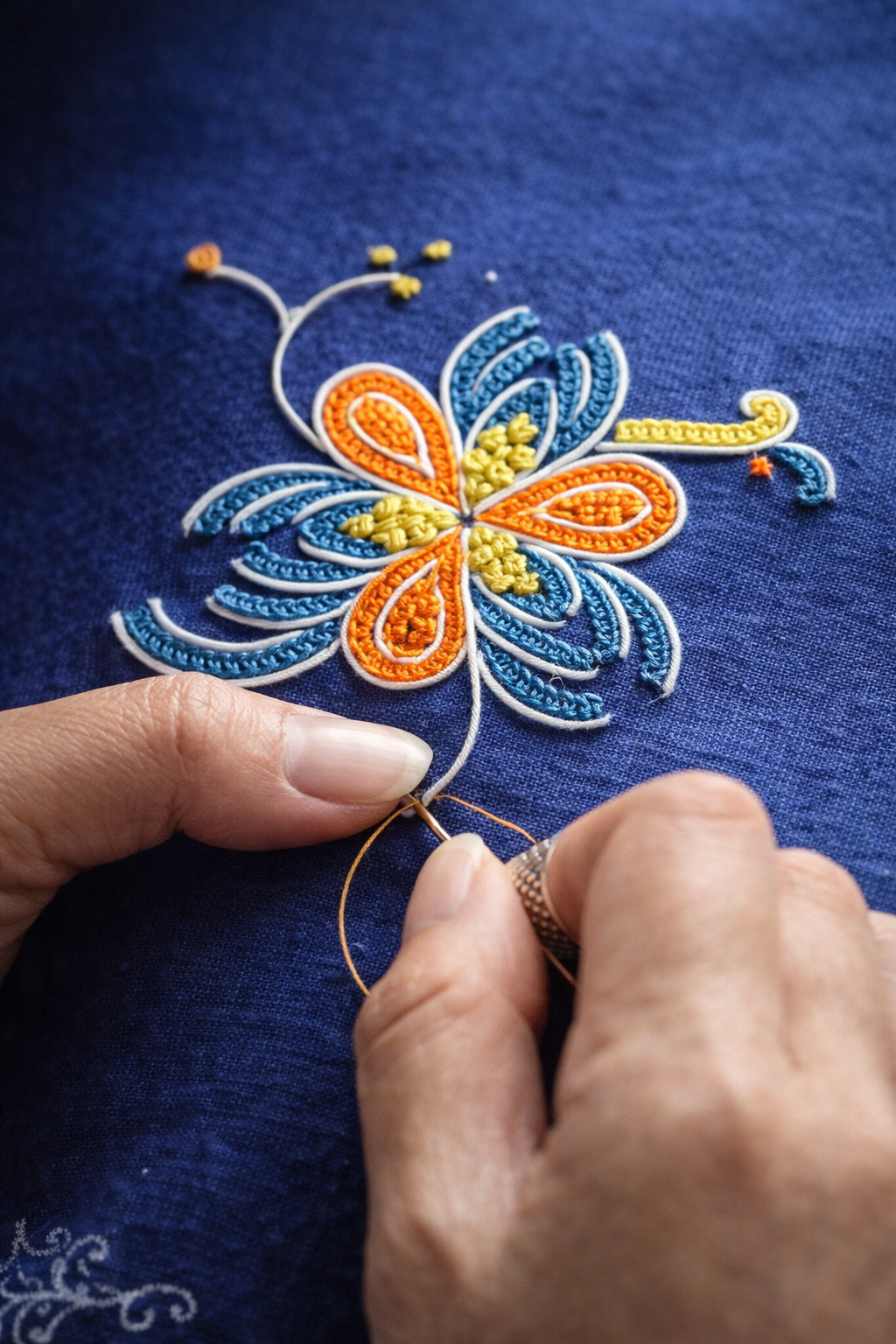
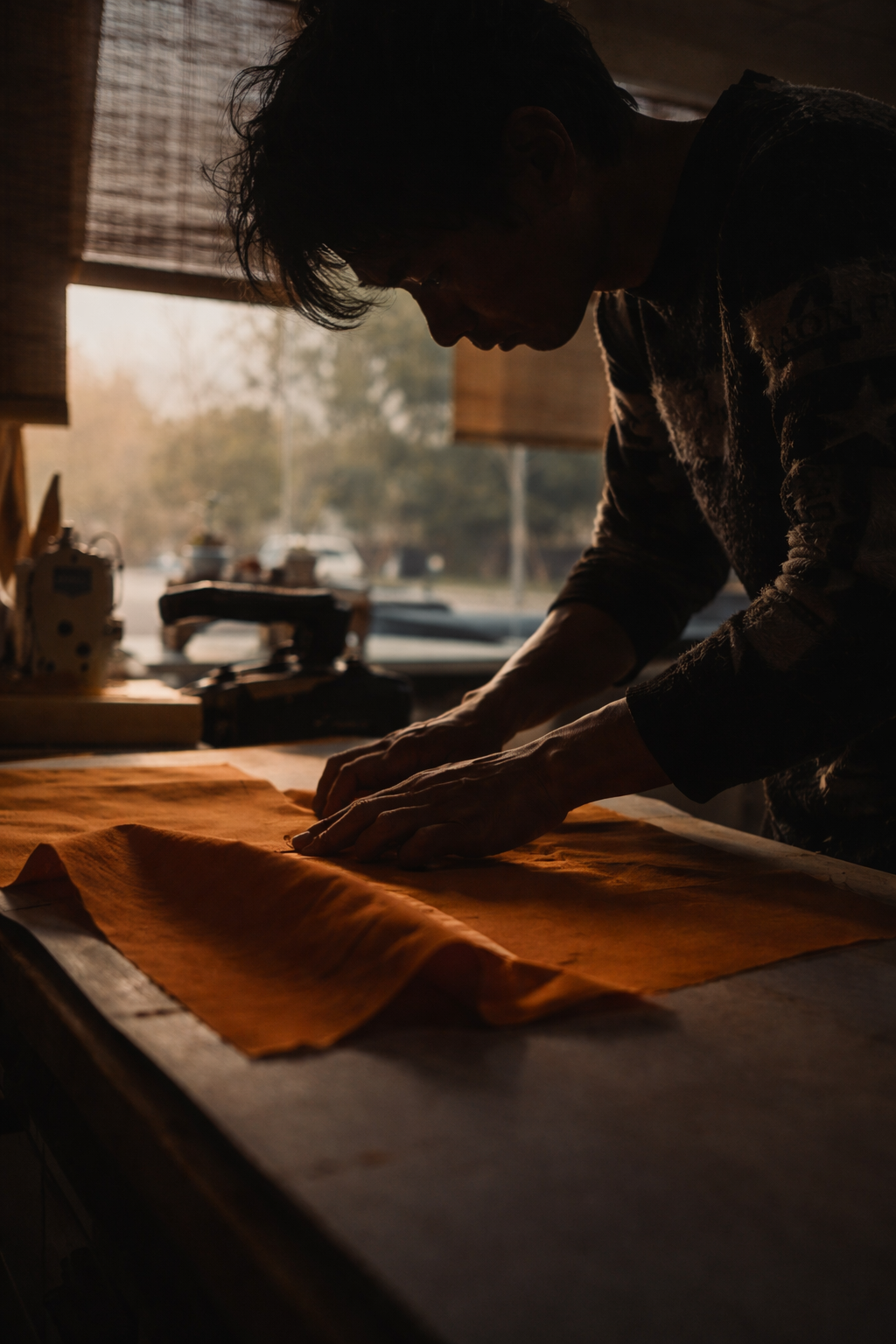
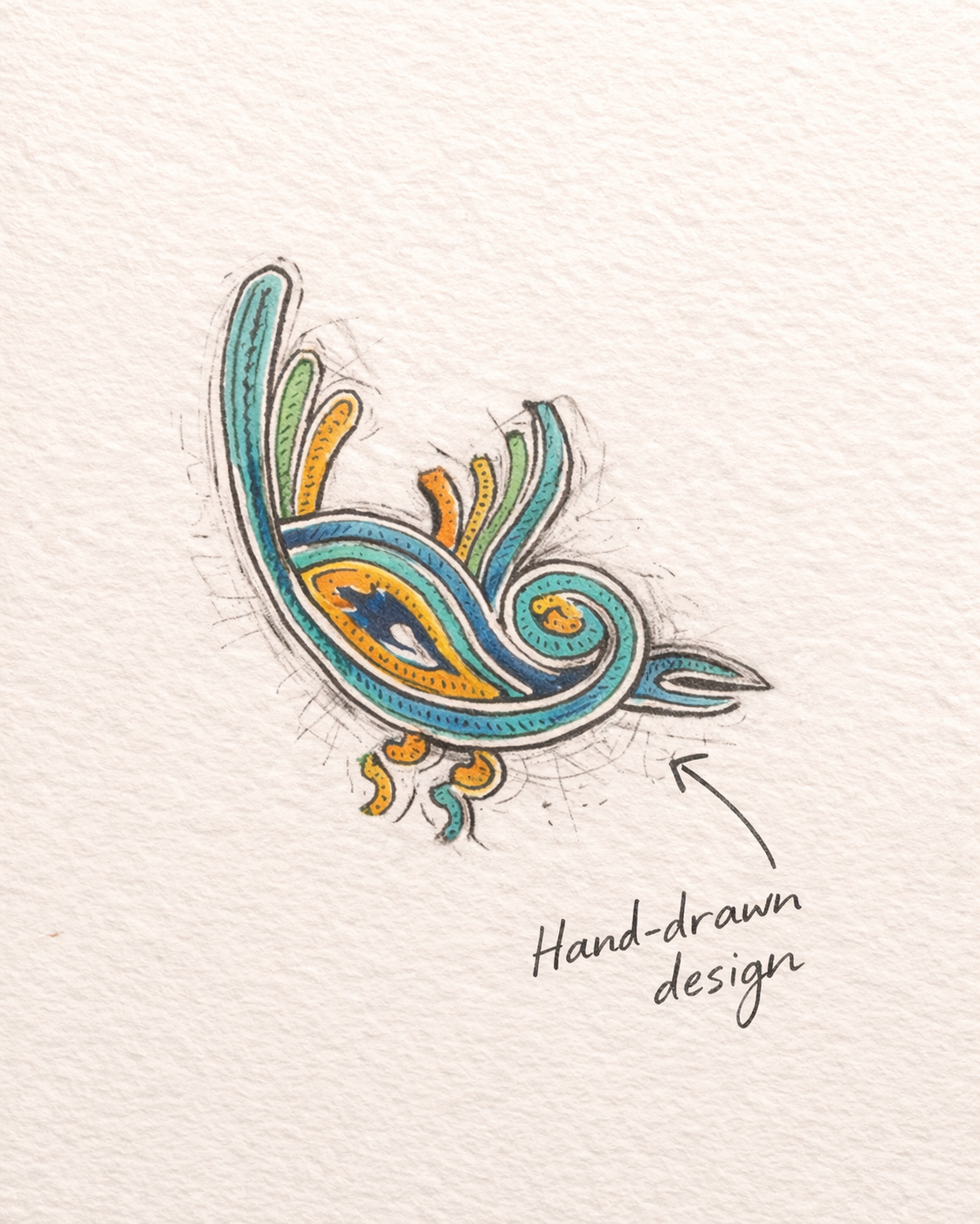
Every piece begins not with a needle, but with a pencil. The Shui artisan first sketches the motif by hand — bird, fish, or flower — directly onto the indigo-dyed cloth. Then comes the most distinctive step in all of Shui embroidery: winding fine silk thread around a single strand of horsetail hair, building a raised, sculptural core unlike anything else in textile art. Only then does the needle follow, laying each strand loop by loop into the fabric. It is slow, deliberate work. The smallest piece takes no fewer than eighty hours. No machines. No shortcuts. Patience is the craft.
01
手 稿
The Sketch
Before any thread is touched, the design is drawn freehand onto the cloth — a bird, a fish, a vine. Motifs passed down through generations, redrawn each time by a different hand.
02
缠 线
Wrapping the Hair
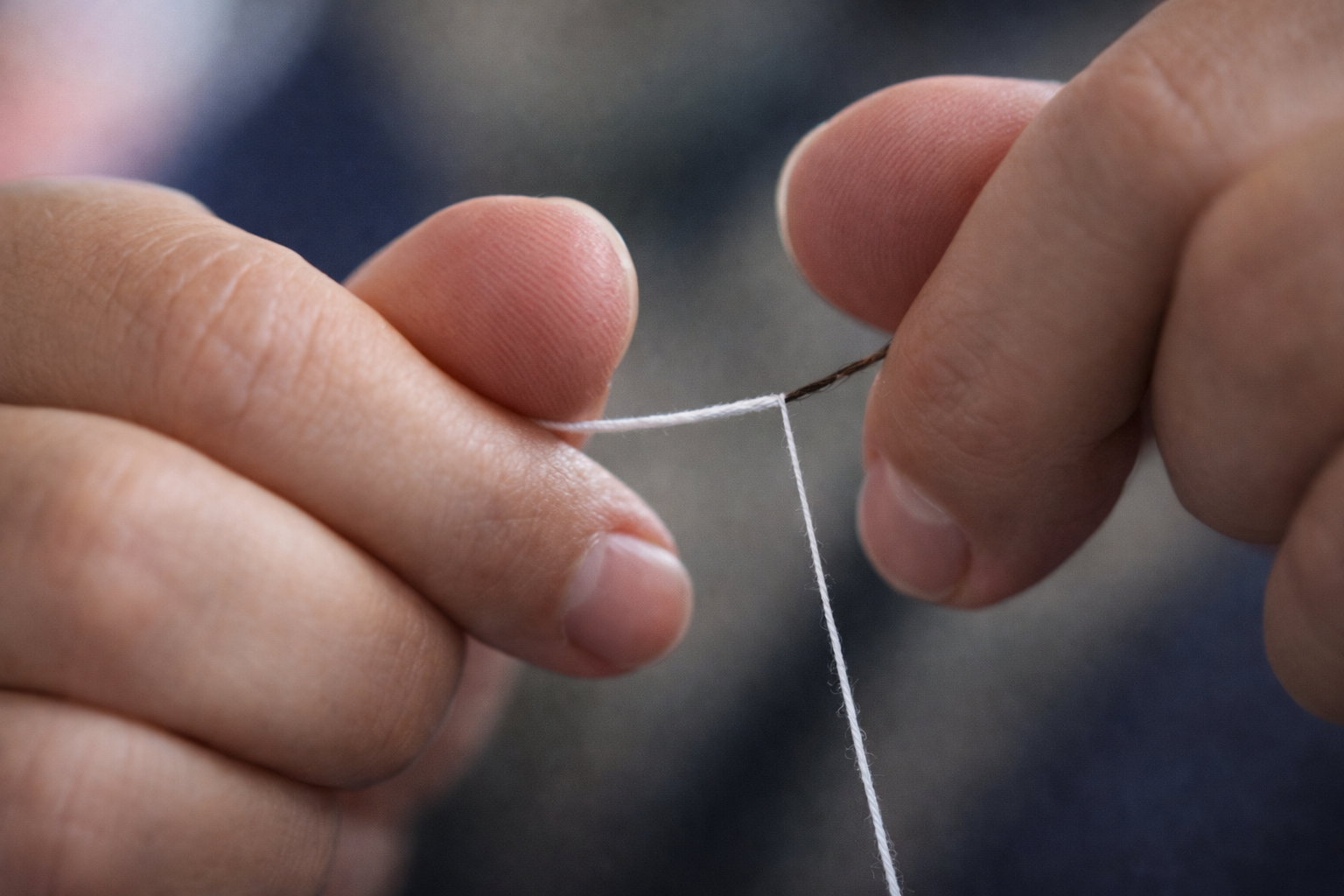
Between 2 and 9 strands of horsetail hair are selected and bound together to form the inner core — the more strands used, the thicker the thread, and the more sculptural and three-dimensional the finished stitch.
03
刺 绣
The Stitching
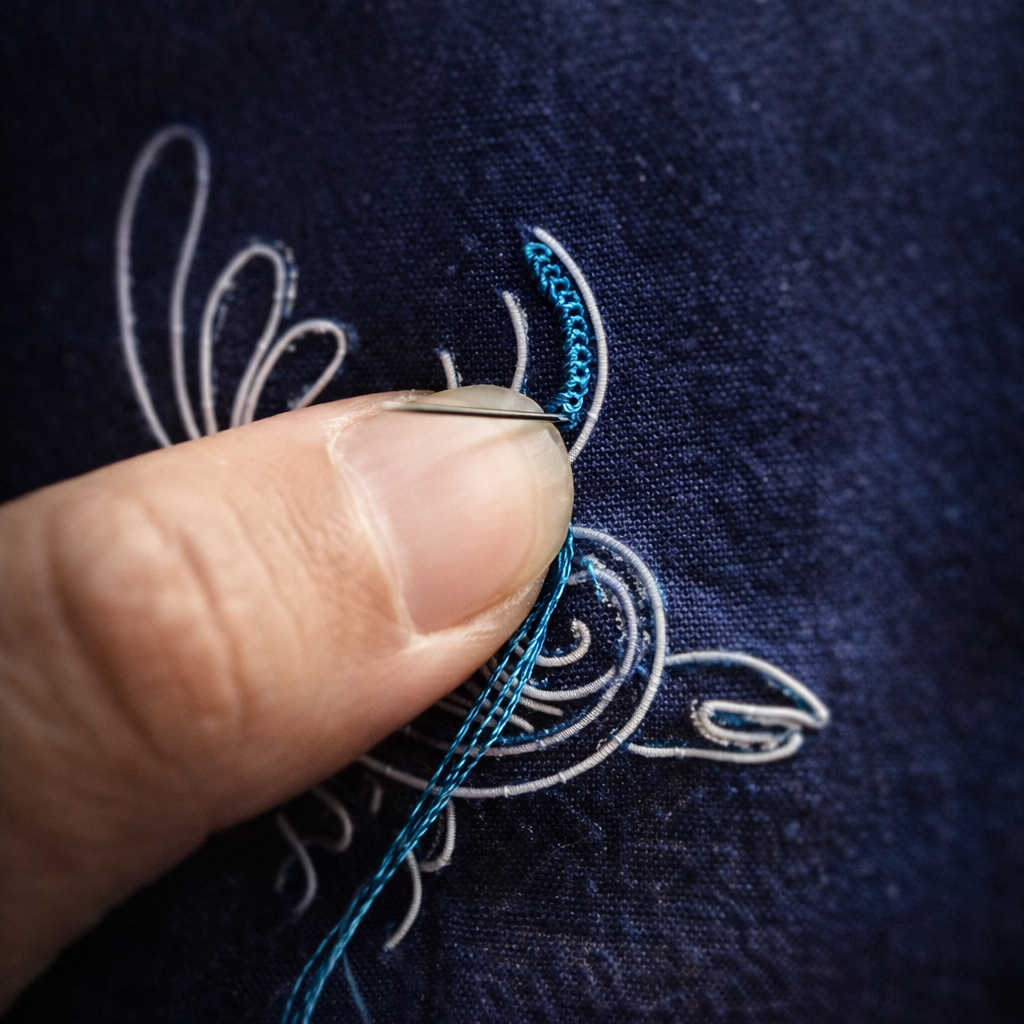
The needle follows the sketch, threading the silk-wrapped hair into the fabric loop by loop. The work is done by feel as much as sight — each stitch placed by a hand that has made this motion ten thousand times.
04
成 品
The Finished Piece
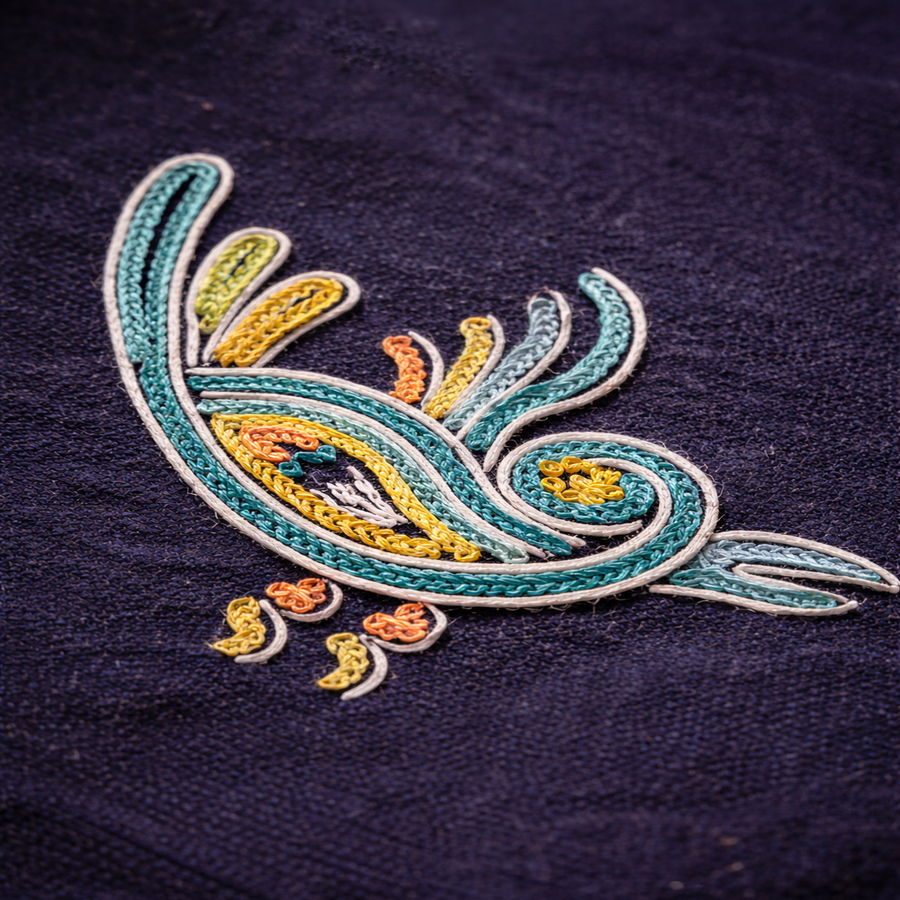
Eighty hours or more of work, held in a 10 × 10 centimetre frame. The motif that began as a pencil line on cloth has become something sculptural — raised, tactile, unmistakably alive.
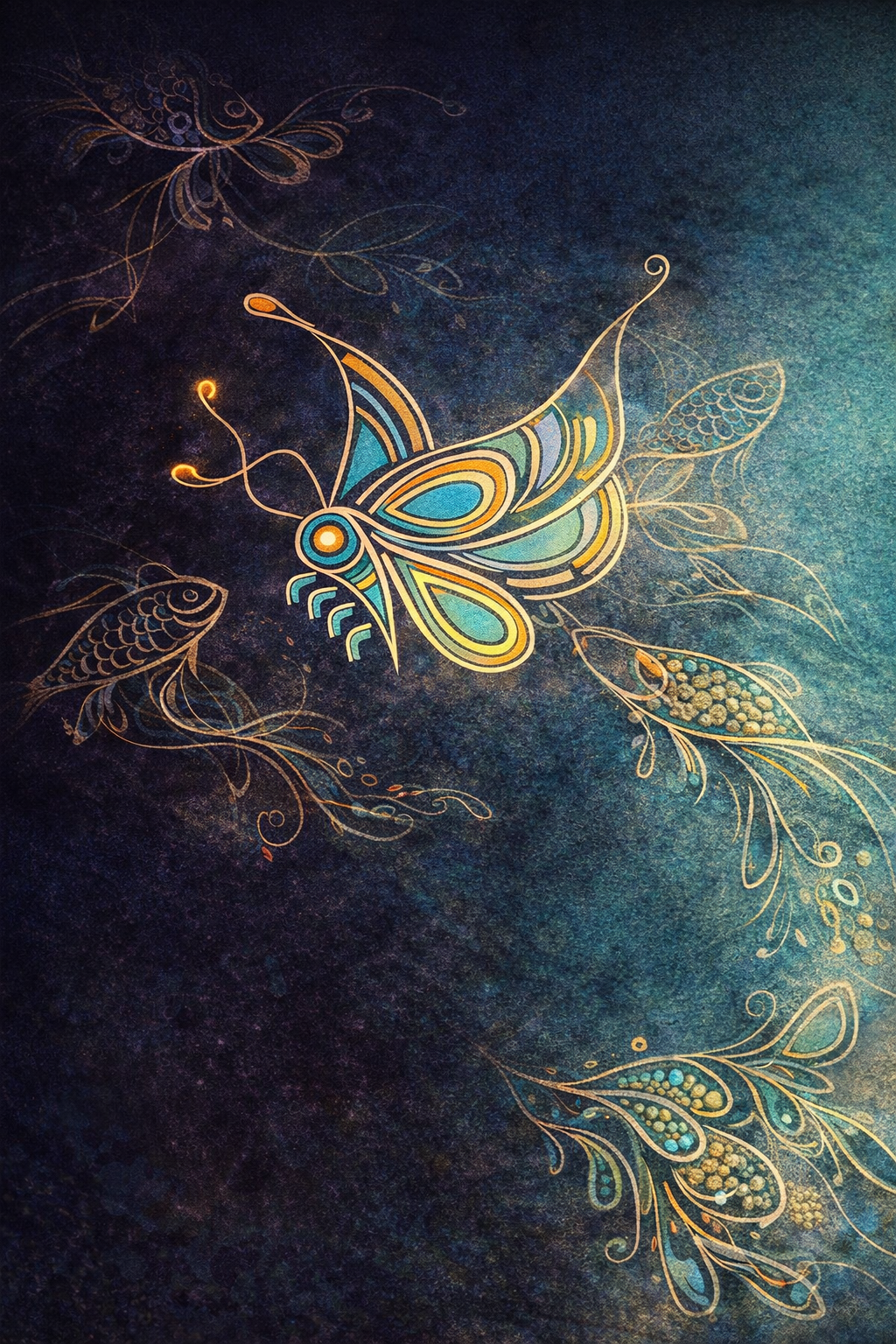
Shui embroidery is a symbolic language. Fish bring abundance. Butterflies carry transformation. The vine signals continuity. When you carry a piece, you carry its meaning.